Accounts Payable vs. Accounts Receivable: A Simple Guide
Money you owe and money owed to you are two sides of the same coin. Here's how accounts payable and receivable work and how to manage each one.
By Nasir Khan · October 14, 2026 · 8 min read
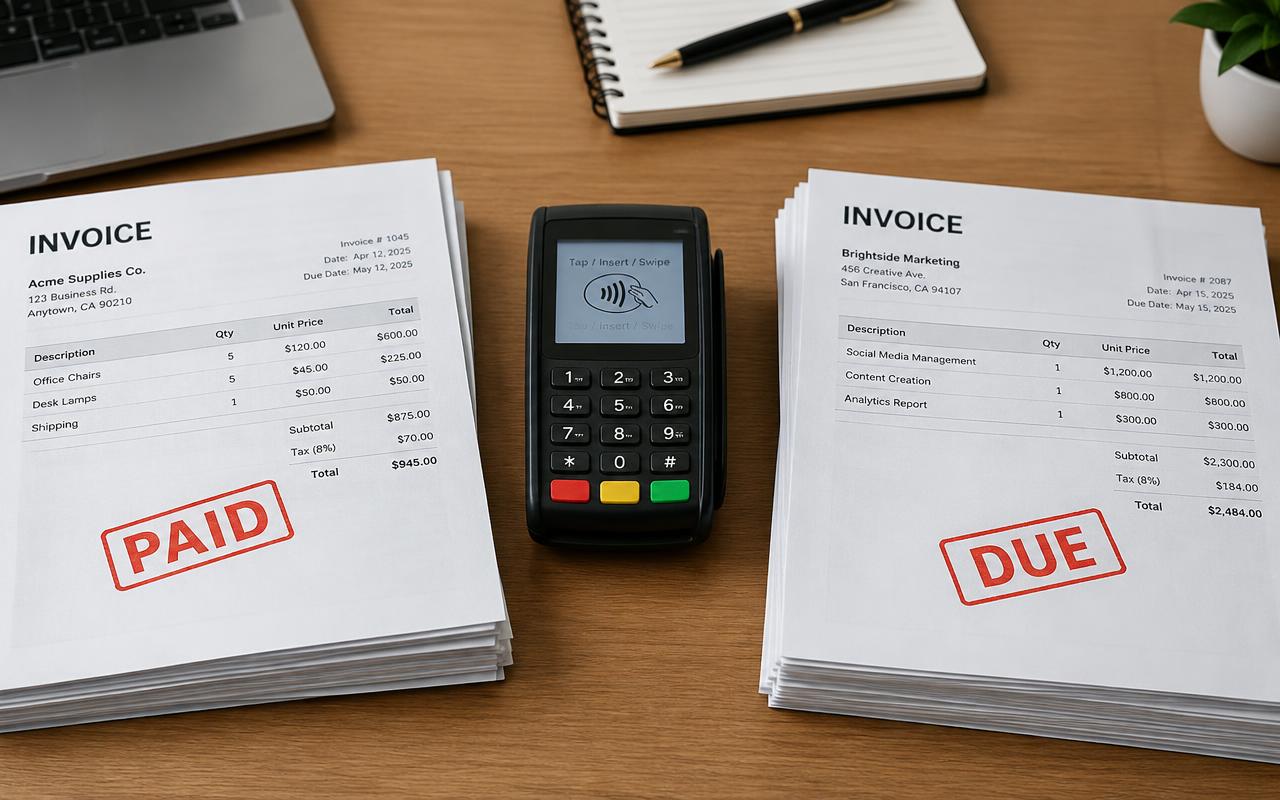
Every business has money flowing in two directions. Customers owe you for work you've done, and you owe suppliers for things you've bought. In bookkeeping, these two buckets have names: accounts receivable (AR) and accounts payable (AP). Understanding the difference is one of the first steps toward truly understanding your cash flow.
This guide explains both terms in plain language, shows how they appear in your books, and shares practical habits for keeping each under control. If you're brand new to the subject, you may want to start with what bookkeeping is first.
What Is Accounts Receivable?
Accounts receivable is the money customers owe your business for goods or services you have already delivered but haven't been paid for yet. When you send an invoice with 30-day payment terms, that invoice amount sits in accounts receivable until the customer pays.
AR is recorded as an asset on your balance sheet because it represents money that is expected to come into the business. However, it isn't cash yet — and an unpaid invoice can't pay your rent.
A Quick Example
A graphic designer finishes a logo project for a client and sends a $1,200 invoice due in 30 days. On the day the invoice is sent, AR increases by $1,200. When the client pays three weeks later, AR decreases by $1,200 and the bank balance increases by the same amount.
What Is Accounts Payable?
Accounts payable is the opposite: money your business owes to suppliers, vendors, or contractors for things you've received but haven't paid for yet. A bill from your wholesaler with 'Net 30' terms belongs in accounts payable until you pay it.
AP is recorded as a liability on your balance sheet because it's an obligation the business must settle in the near future.
Easy way to remember
Receivable = you will receive money. Payable = you will pay money. AR is an asset; AP is a liability.
Key Differences at a Glance
- Direction of money: AR is money coming in; AP is money going out.
- Balance sheet position: AR is a current asset; AP is a current liability.
- Documents: AR is created by invoices you send; AP is created by bills you receive.
- Goal: Collect AR as quickly as possible; pay AP on time, but not unnecessarily early.
Why AR and AP Only Exist Under Accrual Accounting
If you use cash-basis accounting, you only record income when money arrives and expenses when money leaves, so formal AR and AP balances don't appear in your books. Under accrual accounting, you record income when it's earned and expenses when they're incurred, which is why AR and AP become important. Read our guide on cash vs. accrual accounting to decide which method suits you.
How to Manage Accounts Receivable
- Invoice immediately. Send the invoice the same day work is completed. Delays in invoicing mean delays in getting paid.
- Set clear payment terms. State the due date, accepted payment methods, and any late fee policy on every invoice.
- Make paying easy. Offer bank transfer, card, or online payment links so customers have no excuse to wait.
- Follow up on a schedule. Send a friendly reminder a few days before the due date, on the due date, and a week after.
- Review an aging report. Most software produces an AR aging report showing invoices that are 30, 60, or 90+ days overdue.
How to Manage Accounts Payable
- Record every bill when it arrives. Don't let bills sit in your inbox; enter them so you know what you owe.
- Pay on time, not early. Paying on the due date keeps cash in your account longer without hurting supplier relationships.
- Take early-payment discounts when worth it. Terms like '2/10 Net 30' give a 2% discount for paying within 10 days — often a good deal.
- Match bills to orders. Check that what you were billed matches what you ordered and received before paying.
- Keep a payment calendar. A simple weekly review of upcoming bills prevents late fees.
How AR and AP Affect Cash Flow
A business can be profitable on paper and still run out of cash if customers pay slowly while bills are due quickly. Watching the gap between how fast you collect AR and how fast you pay AP helps you avoid that trap. Tracking both regularly is part of a healthy monthly bookkeeping checklist.
Software like QuickBooks Online can track both automatically, send invoice reminders, and show you exactly who owes what at any moment.
Final Thoughts
Accounts receivable and accounts payable are simple ideas with a big impact. Collect what you're owed promptly, pay what you owe on time, and review both every month. Those three habits alone will make your cash flow far more predictable.
Frequently asked questions
Is accounts receivable an asset or liability?
Accounts receivable is a current asset because it represents money customers are expected to pay you soon.
Is accounts payable an expense?
Not exactly. Accounts payable is a liability. The underlying purchase is recorded as an expense or asset, while AP tracks the amount still owed.
What is an aging report?
An aging report groups unpaid invoices or bills by how long they've been outstanding, such as 0–30, 31–60, and 61–90+ days.
Do I need AR and AP if I use cash accounting?
Formal AR and AP balances only appear under accrual accounting, but it's still wise to track unpaid invoices and bills on a simple list.
Related guides
Cash vs Accrual Accounting: Which Is Right for Your Business?
Cash and accrual accounting tell very different stories about your business's finances. Here's how each method works and how to choose the right one.

What Is Bookkeeping? A Complete Beginner's Guide
A plain-English introduction to bookkeeping: what it is, why every small business needs it, and the core tasks you'll need to master.

Monthly Bookkeeping Checklist for Small Business Owners
A step-by-step checklist to close your books every month, catch errors early, and always know where your business actually stands financially.