Cash vs Accrual Accounting: Which Is Right for Your Business?
Cash and accrual accounting tell very different stories about your business's finances. Here's how each method works and how to choose the right one.
By Nasir Khan · July 14, 2026 · 9 min read
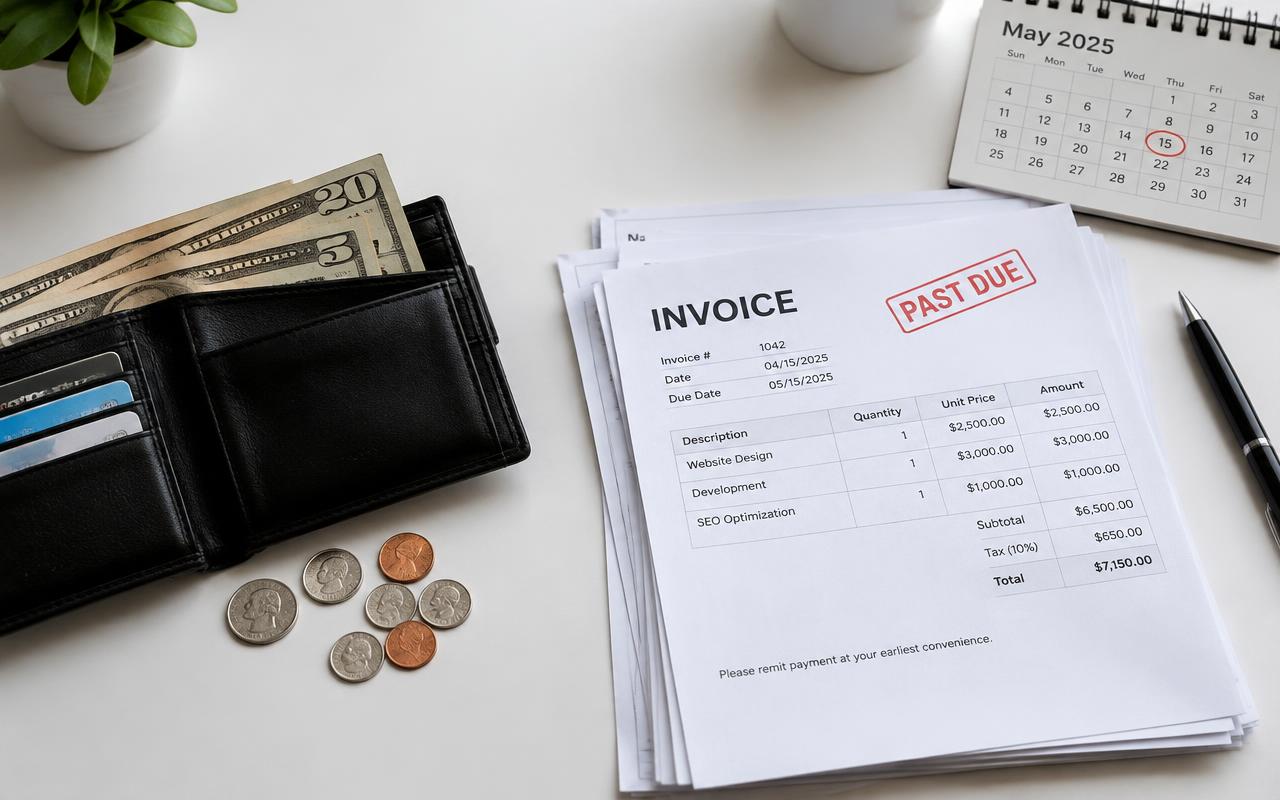
One of the most foundational decisions in bookkeeping is choosing how you'll record transactions: cash basis or accrual basis. This choice affects when revenue and expenses show up on your books, how your financial statements look, and in some cases, how much tax you owe this year versus next.
Many small business owners default to cash accounting because it's simpler, but that's not always the right call. In this guide, we'll break down both methods with real examples, explain the IRS rules that govern which businesses can use which method, and help you decide what's best for your situation.
The Core Difference: Timing
The entire distinction between cash and accrual accounting comes down to timing — specifically, when you recognize revenue and expenses relative to when cash actually changes hands.
Cash Basis Accounting
Under cash basis accounting, you record income when you actually receive payment and expenses when you actually pay them. If you send an invoice in March but your customer doesn't pay until May, you record that revenue in May. It's straightforward and mirrors your bank account activity closely.
Accrual Basis Accounting
Under accrual accounting, you record revenue when it's earned (typically when you deliver a product or service and invoice for it) and expenses when they're incurred, regardless of when cash actually moves. That same March invoice would be recorded as revenue in March, even though the cash arrives in May.
Quick Example
You complete a $5,000 consulting project in December but don't get paid until January. Under cash basis, that $5,000 is January income. Under accrual basis, it's December income — even though the cash hasn't arrived yet.
Pros and Cons of Each Method
Cash Basis: Pros and Cons
- Pro: Much simpler to maintain, especially without bookkeeping software
- Pro: Gives a clear, real-time picture of actual cash on hand
- Pro: You don't pay taxes on income you haven't collected yet
- Con: Can distort profitability, especially for businesses with inventory or long payment cycles
- Con: Doesn't show money you're owed (accounts receivable) or money you owe (accounts payable)
Accrual Basis: Pros and Cons
- Pro: Gives a more accurate picture of long-term profitability and financial health
- Pro: Required for businesses with inventory under IRS rules (with some exceptions)
- Pro: Preferred by lenders, investors, and most GAAP-based financial reporting
- Con: More complex to track; usually requires accounting software
- Con: You may owe tax on income you haven't actually collected yet
IRS Rules: Who Can Use Which Method
You don't always get a free choice between the two methods. The IRS has specific rules about who must use accrual accounting:
- C corporations (other than certain small ones) generally must use accrual accounting if average annual gross receipts exceed $30 million (2024 threshold, adjusted periodically for inflation)
- Businesses that maintain inventory are generally required to use accrual accounting for purchases and sales of that inventory, though the IRS allows a simplified exception for smaller businesses under the gross receipts test
- Most sole proprietors, freelancers, and small service-based businesses below the gross receipts threshold can freely choose either method
- Once you choose a method on a filed tax return, changing it later generally requires IRS approval via Form 3115
Because these rules have thresholds and exceptions that change over time, it's worth confirming your eligibility with a tax professional or CPA before locking in a method, especially if your business carries inventory or is growing quickly.
Which Method Should You Choose?
For many very small or early-stage businesses, cash basis is the practical starting point. It's easier to manage without dedicated software, and it ties your books directly to your bank balance. If you're just getting your chart of accounts set up and want something manageable, cash basis is a reasonable place to begin.
However, accrual accounting becomes increasingly valuable as your business grows, especially if you extend credit to customers, carry inventory, or need financial statements that accurately reflect your performance over a given period. It's also essential if you're seeking a business loan or outside investment, since lenders and investors almost always expect accrual-based financials.
Industry Considerations
Certain industries lean strongly toward one method due to how they operate. Retailers and manufacturers that carry significant inventory almost always use accrual accounting because it properly matches the cost of goods sold with the revenue from those sales in the same period. Service-based businesses like consultants, freelancers, and agencies, on the other hand, often find cash basis sufficient since they typically don't carry inventory and have simpler revenue recognition needs.
Seasonal businesses should pay particular attention to their method choice. A landscaping company that collects most of its cash in summer but incurs expenses year-round might get a skewed picture of profitability under cash basis alone, since a slow winter month could look artificially unprofitable even though it's simply the normal seasonal cycle.
A Hybrid Approach
Some businesses use a modified cash basis, tracking day-to-day transactions on a cash basis but adjusting for major items like accounts receivable, accounts payable, and inventory at month-end or year-end. This isn't a formal GAAP method, but it can offer a practical middle ground for growing businesses not yet ready for full accrual bookkeeping.
There's no universal right answer. The best approach is to weigh your business's size, industry, growth plans, and reporting needs, and to revisit the decision periodically as your business evolves.
How Your Method Affects Day-to-Day Bookkeeping
Your accounting method shapes how you handle everyday tasks. For example, during bank reconciliation, cash-basis books will match your bank statements more closely, while accrual-basis books will show timing differences between recorded transactions and actual bank activity due to outstanding invoices and bills.
If you use software like QuickBooks Online, you can often generate reports in either basis regardless of which method you officially use for tax filing, which gives you flexibility to analyze your business both ways. Check out our QuickBooks Online tutorial for help setting up your reporting preferences.
Tip
If you're unsure which method is right for you, try running your books both ways for a quarter. Comparing the two can reveal how much of a difference timing makes for your specific business model.
Making the Switch
If you decide to switch from cash to accrual (or vice versa), you'll generally need to file Form 3115, Application for Change in Accounting Method, with the IRS. This isn't something to do casually — it affects your tax timing and requires careful calculation of a “section 481(a) adjustment” to account for the transition. Work with a CPA to handle this correctly and avoid unintended tax consequences.
Frequently asked questions
Can I use cash basis for my own records but accrual for taxes?
Yes, many businesses maintain accrual-basis financial statements for internal management and lender reporting while using cash basis for tax filing, as long as they qualify under IRS rules. Software like QuickBooks can often generate both views from the same data.
Does accrual accounting mean I pay taxes before I get paid?
Potentially, yes. Under accrual accounting, you recognize revenue when earned, not when collected, which means you could owe tax on income you're still waiting to receive. This is an important cash flow consideration when choosing your method.
Is accrual accounting required for LLCs?
Not automatically. The requirement depends on factors like business structure, inventory use, and gross receipts, not the LLC designation itself. Most small LLCs without inventory can use cash basis unless they exceed the relevant revenue thresholds.
Which method do most small businesses actually use?
Cash basis is more common among very small businesses and sole proprietors because of its simplicity. However, as businesses grow, add inventory, or seek financing, many transition to accrual accounting for more accurate financial reporting.
Can I change my accounting method every year?
No. Once you adopt a method on a filed tax return, you generally need IRS approval to change it, typically through Form 3115. This prevents businesses from switching methods opportunistically to minimize taxes year to year.
Related guides

Bookkeeping vs Accounting: What's the Difference?
Bookkeeping and accounting are often used interchangeably, but they're different jobs with different goals. Here's how to tell them apart.
Chart of Accounts: Complete Setup Guide
A well-built chart of accounts is the backbone of accurate books. Here's how to set one up correctly from the start, with real-world examples.

How to Do Bookkeeping for a Small Business (Step-by-Step)
Learn the exact steps to set up and run bookkeeping for your small business, even if you've never touched a ledger before.