How to Create a Profit and Loss Statement (Step by Step)
The profit and loss statement tells you whether your business actually made money. Here's how to build one and what each line really means.
By Nasir Khan · October 16, 2026 · 9 min read
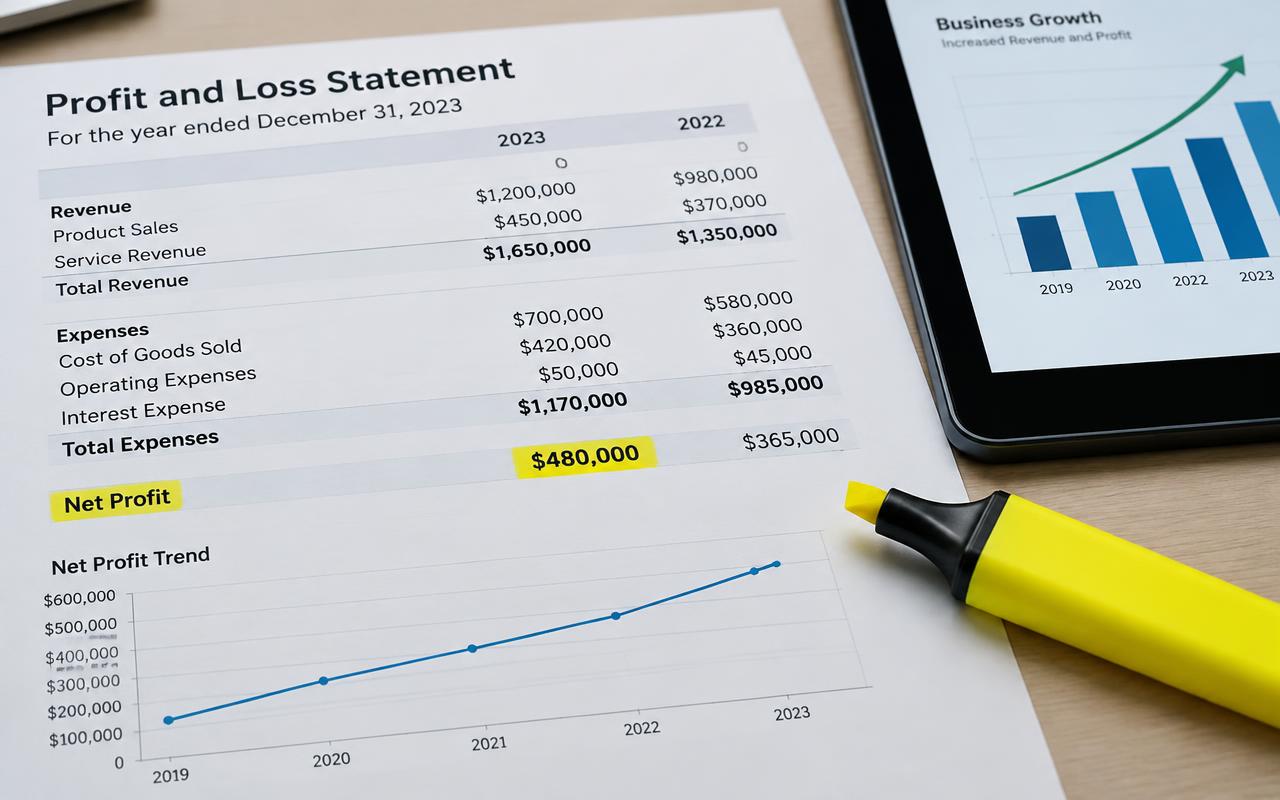
A profit and loss statement — also called a P&L or income statement — answers the most important question in business: did we make money during this period? It summarizes your revenue, subtracts your costs, and shows what's left over.
You don't need to be an accountant to create or read one. If your books are reasonably up to date, you can build a P&L in under an hour. This guide walks you through each section with a simple example.
What a Profit and Loss Statement Shows
A P&L covers a specific period — usually a month, quarter, or year. It follows a simple formula:
The basic formula
Revenue − Cost of Goods Sold = Gross Profit. Then Gross Profit − Operating Expenses = Net Profit (or Loss).
Step 1: Choose Your Reporting Period
Decide what period you're reporting on. Monthly P&Ls are great for spotting trends early, while annual statements are needed for taxes. Make sure all your transactions for that period are recorded and your bank accounts are reconciled first — our bank reconciliation guide explains how.
Step 2: Total Your Revenue
Add up all income from sales of products or services during the period. Subtract any refunds, returns, or discounts to get net revenue. Keep non-operating income, like interest earned, on a separate line so it doesn't distort your core results.
Step 3: Calculate Cost of Goods Sold (COGS)
COGS includes the direct costs of producing what you sold — raw materials, inventory purchases, and direct labor. Service businesses may have little or no COGS. Subtract COGS from revenue to get gross profit.
Step 4: List Operating Expenses
Operating expenses are the costs of running the business that aren't tied directly to each sale. Group them using the categories from your chart of accounts. Common ones include:
- Rent and utilities
- Salaries and wages (non-direct staff)
- Marketing and advertising
- Software subscriptions
- Insurance
- Professional fees (accountant, legal)
- Office supplies
Step 5: Calculate Net Profit
Subtract total operating expenses from gross profit to get operating profit. Then add or subtract any non-operating items (like interest income or loan interest) and taxes to arrive at net profit, often called the bottom line.
A Simple Example
Imagine a small online candle shop for the month of September:
- Revenue: $10,000
- COGS (wax, jars, wicks, packaging): $3,500
- Gross profit: $6,500
- Operating expenses (ads, website, shipping supplies, rent): $4,200
- Net profit: $2,300
From this, the owner can see a gross margin of 65% and a net margin of 23% — useful numbers for comparing month to month.
How to Read Your P&L Wisely
- Compare periods. One P&L is a snapshot; comparing several shows the trend.
- Watch your margins. A rising revenue with a falling margin may mean costs are creeping up.
- Look for unusual spikes. A big jump in an expense line deserves a closer look.
- Remember profit isn't cash. Under accrual accounting, profit may include invoices not yet paid. See cash vs. accrual accounting.
Common Mistakes to Avoid
Mixing personal expenses with business ones, forgetting to record small cash purchases, and putting loan repayments in expenses (only the interest is an expense) are the most frequent errors. Our list of common bookkeeping mistakes covers more.
Final Thoughts
Creating a monthly P&L turns your bookkeeping from a chore into a decision-making tool. Once you get into the habit, you'll understand exactly where your money comes from and where it goes.
Frequently asked questions
Is a P&L the same as an income statement?
Yes. Profit and loss statement, P&L, and income statement all refer to the same report.
How often should I prepare a P&L?
Monthly is ideal for small businesses. At minimum, prepare quarterly and annual statements.
Are loan repayments an expense on the P&L?
No. Only the interest portion is an expense. The principal repayment reduces a liability on the balance sheet.
Can I make a P&L in a spreadsheet?
Yes. A spreadsheet works fine for small businesses, though accounting software can generate it automatically.
Related guides

Chart of Accounts: Complete Setup Guide
A well-built chart of accounts is the backbone of accurate books. Here's how to set one up correctly from the start, with real-world examples.
Cash vs Accrual Accounting: Which Is Right for Your Business?
Cash and accrual accounting tell very different stories about your business's finances. Here's how each method works and how to choose the right one.

Monthly Bookkeeping Checklist for Small Business Owners
A step-by-step checklist to close your books every month, catch errors early, and always know where your business actually stands financially.